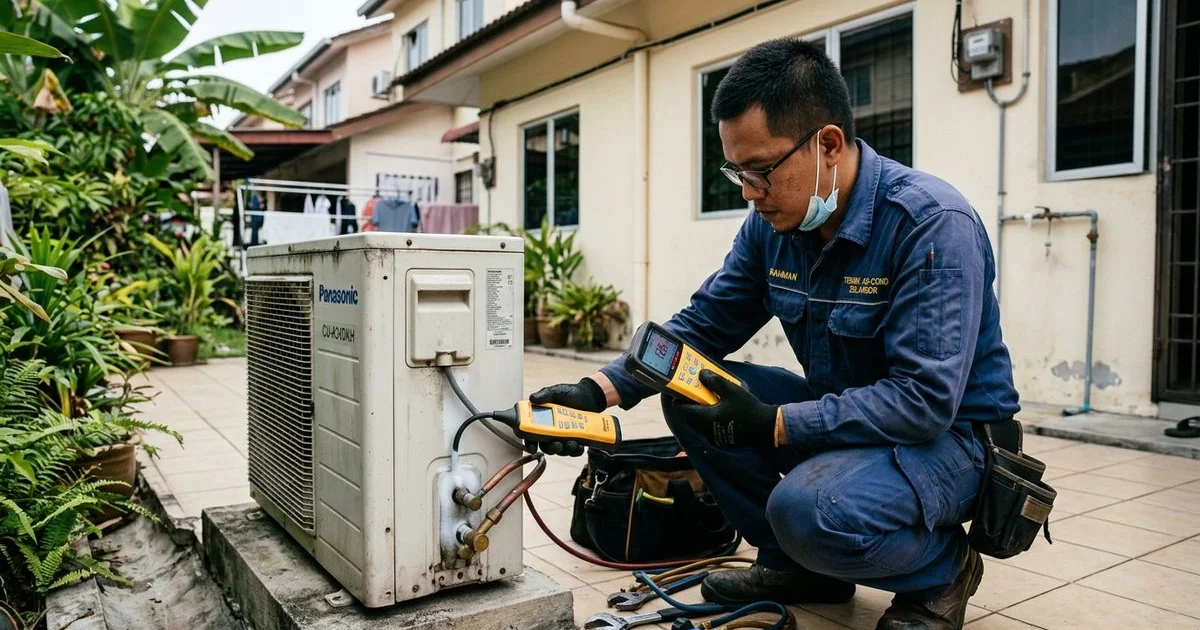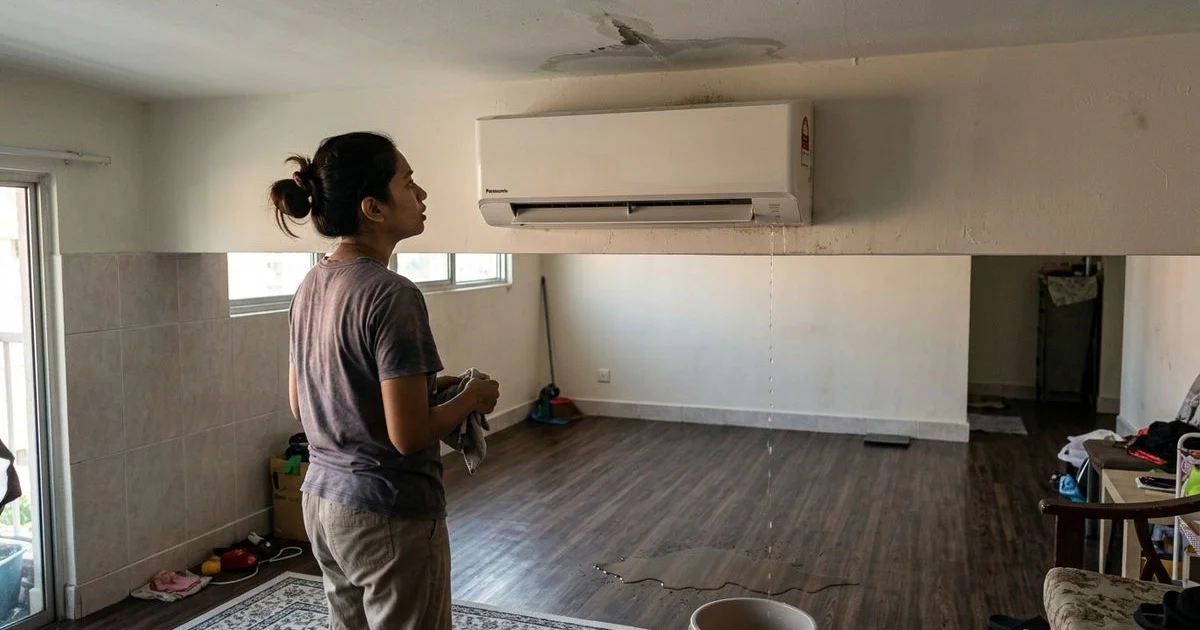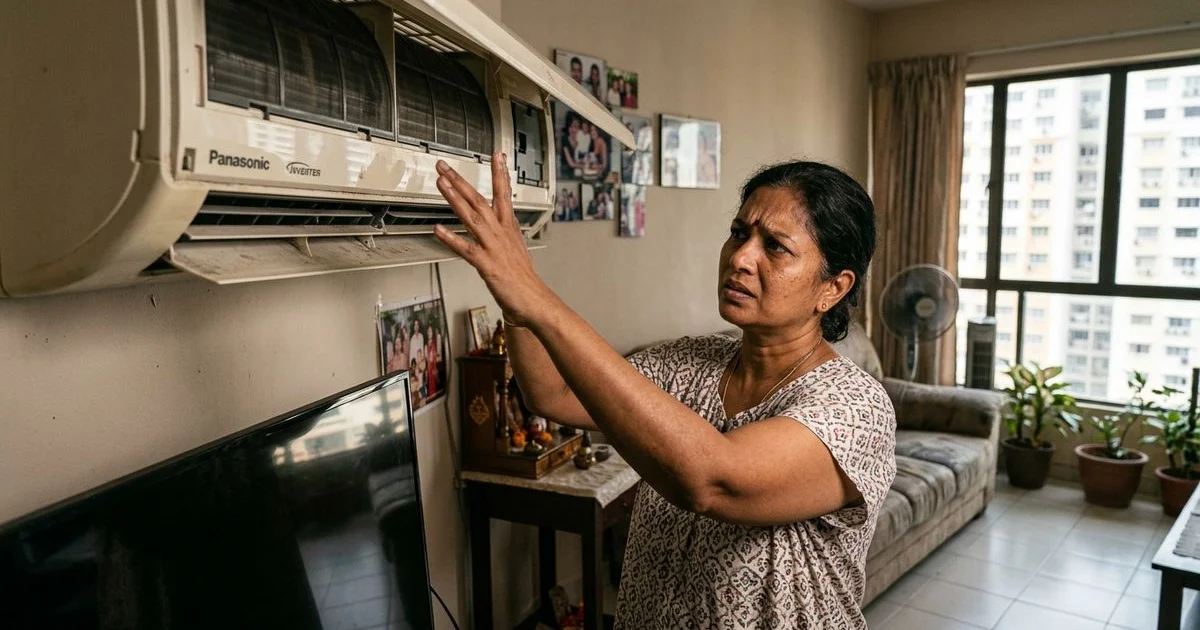
The phone rings at the AC Service Pro Subang Jaya dispatch desk and the script is almost identical every time. The unit is on, the fan is running, the air comes out of the vent, but the room sits stubbornly at 30°C while the family sweats it out at dinner.
Before you start hunting for compressor replacement quotes, take a breath. After 8 years of attending these calls, we can group nearly every weak-cooling complaint into one of three fault families. Identifying the right family first cuts the diagnostic time in half and stops you from paying for the wrong repair.
A 60-Second Self Check Before You Call Anyone
This is not glamorous, but skipping it costs people in Subang Jaya around RM50 a week in unnecessary diagnostic visits. Confirm all four points before you book a technician:
- The remote shows a snowflake icon, not the sun, droplet, or fan symbol
- The target temperature is between 24°C and 25°C, not 28°C
- The fan speed is set to High or Auto, not Low
- The outdoor unit is humming, not silent
If any of those are wrong, fix them first and give the unit ten minutes to settle. We genuinely have technicians turn back from jobs in USJ because the remote was set to Fan mode by a curious child.
Family 1: Airflow Restriction
This is the single largest cause of weak-cooling calls. Anything that stops warm room air from reaching the cold evaporator coil shows up as “the air is not cold enough”, even though the refrigerant loop is working perfectly.
Dirty Filter or Clogged Coil
Dust, skin cells, pet hair, and the diesel particulate that drifts in from the Federal Highway settle on the filter mesh and work their way down into the coil fins. Once the fins are blocked, the unit cannot transfer heat efficiently, and cooling output collapses.
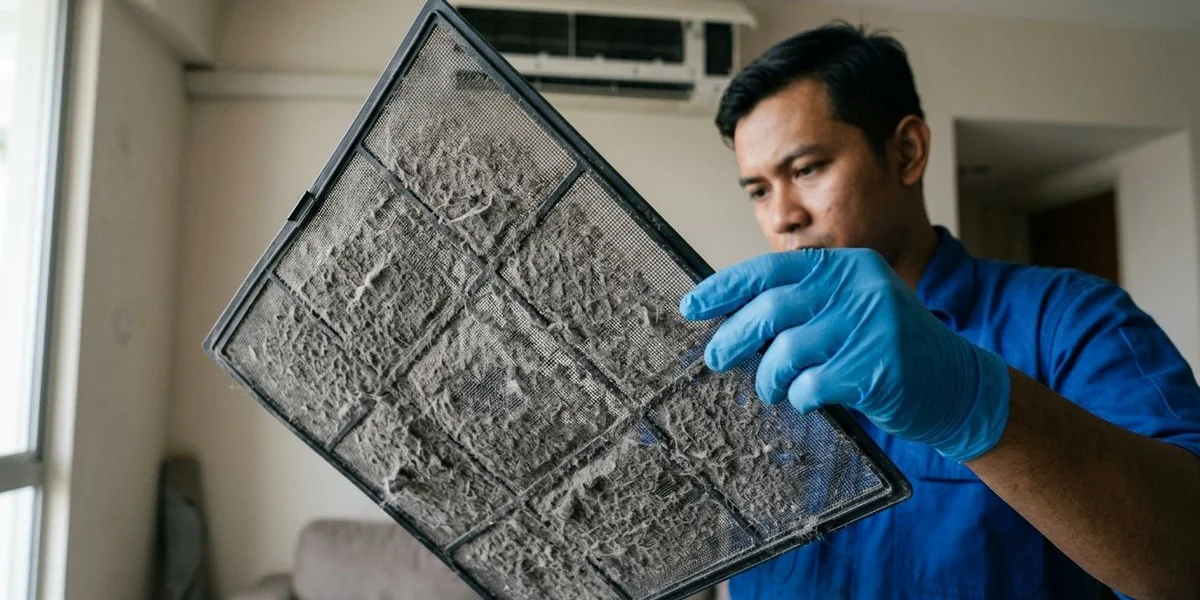
If the filter looks mildly dusty, a DIY rinse under the tap restores airflow immediately. If it has been more than a year since the last professional service, the coil itself is almost certainly furred up and a full chemical wash is the only fix that reaches inside the fin gaps.
Frozen Evaporator Coil
Counter-intuitive but common. When airflow drops far enough or refrigerant pressure falls, the coil temperature dips below freezing and condensation locks into a sheet of ice. Once the coil is iced over, cooling stops entirely and warm air blows from the vent.
Tell-tale signs include white frost visible on the copper pipe at the outdoor unit, water dripping heavily from the indoor unit as the ice thaws, and air that is actually warm rather than mildly cool. Switch the unit off for at least two hours and let the ice melt naturally. Never chip at it. Aluminium fins bend under the lightest pressure and a flattened fin block becomes its own separate problem.
Family 2: Refrigerant Loss
Refrigerant runs in a sealed loop and should never need topping up in a healthy system. If gas is low, there is a leak somewhere, usually at a flare joint or a corroded section of copper pipe.
The classic symptom: the unit cools reasonably for the first ten minutes after startup, then gradually warms up. You may hear a soft hiss from the copper pipes, see frost forming at one specific joint on the outdoor unit, or notice the air becoming clammy rather than crisp.
The right fix is to pressure test, locate the leak electronically, solder the joint, vacuum the system, and recharge to spec. Anyone offering to “just top up” the gas without finding the leak is setting you up for a repeat visit within weeks. Pay once, properly.
Family 3: Electrical and Control Faults
Capacitor or Contactor Failure
The capacitor is a small cylindrical component in the outdoor unit that delivers the electrical jolt needed to start the compressor. When it fails, the compressor never turns on, even though the outdoor fan keeps spinning. The indoor blower throws room-temperature air, and standing next to the outdoor unit you hear the fan but no deep compressor hum.
One warning. Local forum threads are full of complaints about contractors claiming a capacitor is dead just to charge for the swap. Our rule: if the compressor is actually humming and running, the capacitor is fine. A legitimate technician will test it in front of you with a multimeter and show you the microfarad reading before replacing it.
Failing Inverter PCB
Less common than the other faults, but worth knowing about. The PCB on inverter units controls compressor speed dynamically. When it begins to fail, the compressor can get stuck at low power, mimicking a dirty coil exactly. Diagnosis needs a brand-specific tool. If the unit is within warranty, contact the brand service agent first. Outside warranty, expect a PCB replacement to land between RM300 and RM700 depending on the model.
What a Real Diagnostic Visit Looks Like
A technician who knows the trade follows a fixed sequence rather than guessing. Here is what we run through on every weak-cooling call across Subang Jaya:
- Visual: Filter, coil, drain pan, copper insulation
- Electrical: Capacitor microfarad reading, contactor pull-in, blower motor amps
- Refrigerant: Pressure test against manufacturer spec, sniff for leaks at suspected joints
- Airflow: Temperature differential between return air and supply air (target is 8 to 12°C)
- Drainage: Confirm the drain line is clear and water is leaving the unit
The whole sequence takes 30 to 45 minutes for a single split unit. At the end you should receive a clear written diagnosis and a fixed quote for the repair. No guesswork, no upsell.
When to Stop Troubleshooting
If the self check fails to bring the cooling back within 24 hours, book a professional visit. A proper diagnosis on day one stops a RM80 problem from snowballing into a RM1,500 compressor replacement.
WhatsApp us at 016-636 6769 with your unit’s HP, brand, age, and a description of the symptoms. A senior technician will confirm a same-week appointment. The diagnostic fee is waived if you proceed with the repair, and every fix is covered by our 30-day workmanship warranty.