“Can you come top up my aircond again?” That is one of the most common calls our dispatch desk handles every week. And the honest answer is almost always no, because topping up the same system for the third time is a waste of your money.
Here is the uncomfortable truth most customers do not want to hear. Refrigerant does not run out in a healthy aircond. It circulates in a sealed loop and stays inside the system for the full life of the compressor. If your gas is disappearing, you have a leak, and every month you keep feeding it instead of fixing it, you are paying twice. Once for the gas, and once for the slow compressor damage that ends with a replacement bill ten times bigger.
This guide reframes the warning signs into four categories you can actually check yourself, then explains exactly what a proper repair looks like and when to call us.
The Math Nobody Wants to Do
Before the warning signs, take a moment with the cost reality. A typical residential leak repair runs RM250 to RM400 if caught early. A repeat-top-up cycle on an unrepaired leak adds up fast.
| Approach | Year One Spend | What You End Up With |
|---|---|---|
| Proper leak diagnosis and repair | RM250 to RM400 | A sealed system that holds charge for years |
| Three top-ups, no leak repair | RM450 to RM540 | The same leak, plus compressor wear |
| Top-up cycle until compressor failure | RM2,000 plus over 18 months | A new compressor and weeks of downtime |
The math has never worked in favour of repeated top-ups. It always favours sealing the leak once.
Spot a Leak by What You See
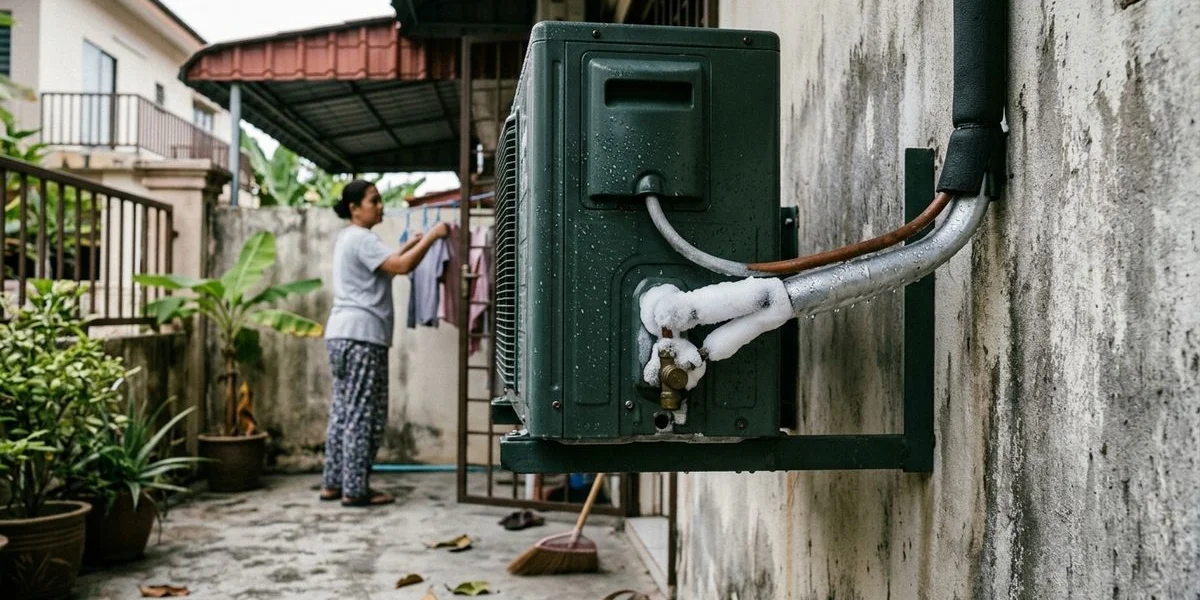
Frost on the Outdoor Copper Pipe
Counter-intuitive but common. When refrigerant mass drops, the small amount still circulating gets extremely cold before evaporating. Moisture in the air freezes onto the coil and the copper pipe, forming a visible white crust.
If you see frost on the thicker copper pipe at the outdoor compressor, or a sheet of ice on the indoor coil, switch the unit off immediately. Running a frozen system is one of the fastest ways to destroy the compressor, and the ice itself can flatten the delicate aluminium fins as it thaws. Let it melt for at least two hours before doing anything else, and never chip at it with a tool.
Oily Residue Around the Copper Joints
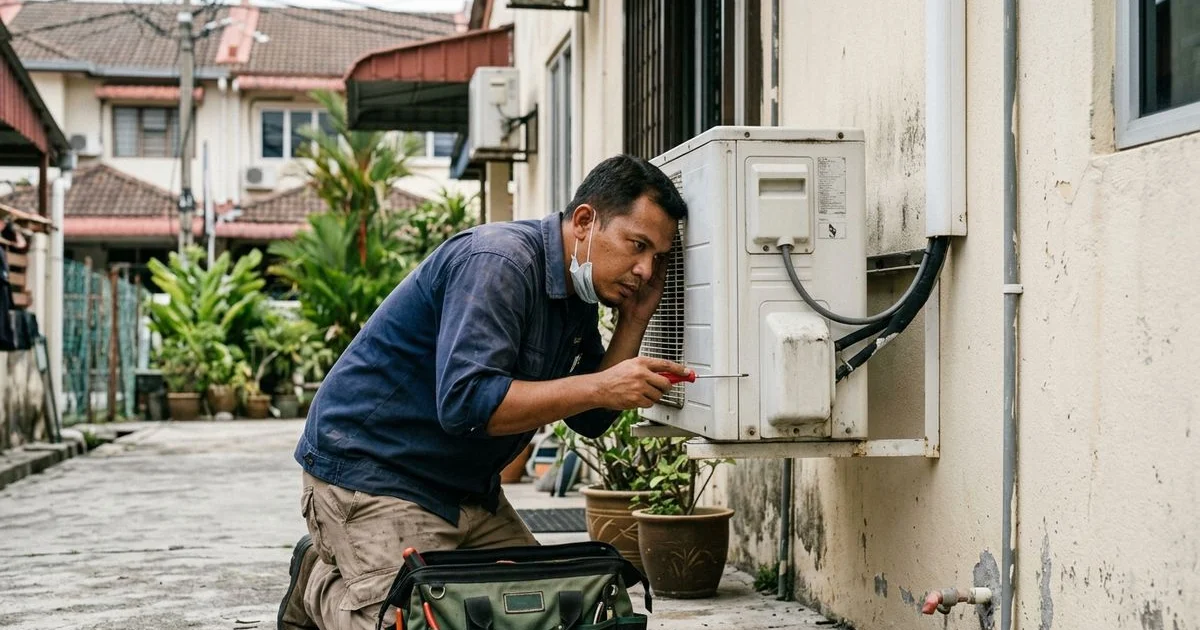
Refrigerant circulates mixed with a trace of compressor oil. The gas itself is invisible when it escapes, but the oil leaves a dark, greasy film you can actually see. Check the service valves at the outdoor unit, the wall just below the indoor unit, and the rubber insulation wrapped around the copper pipes. Any oily stain means gas is escaping and needs sealing, even if cooling still feels acceptable today.
Spot a Leak by What You Hear
A soft, steady hiss from the bottom of the indoor unit or from the outdoor service valves is the sound of pressurised gas escaping. It is continuous, often with a higher-pitched whine, and it does not stop on its own.
Do not confuse this with the normal whoosh an inverter makes when ramping up power. Inverter whoosh is intermittent and ties to the compressor speed. A leak hiss runs constantly in the background.
Spot a Leak by What You Feel
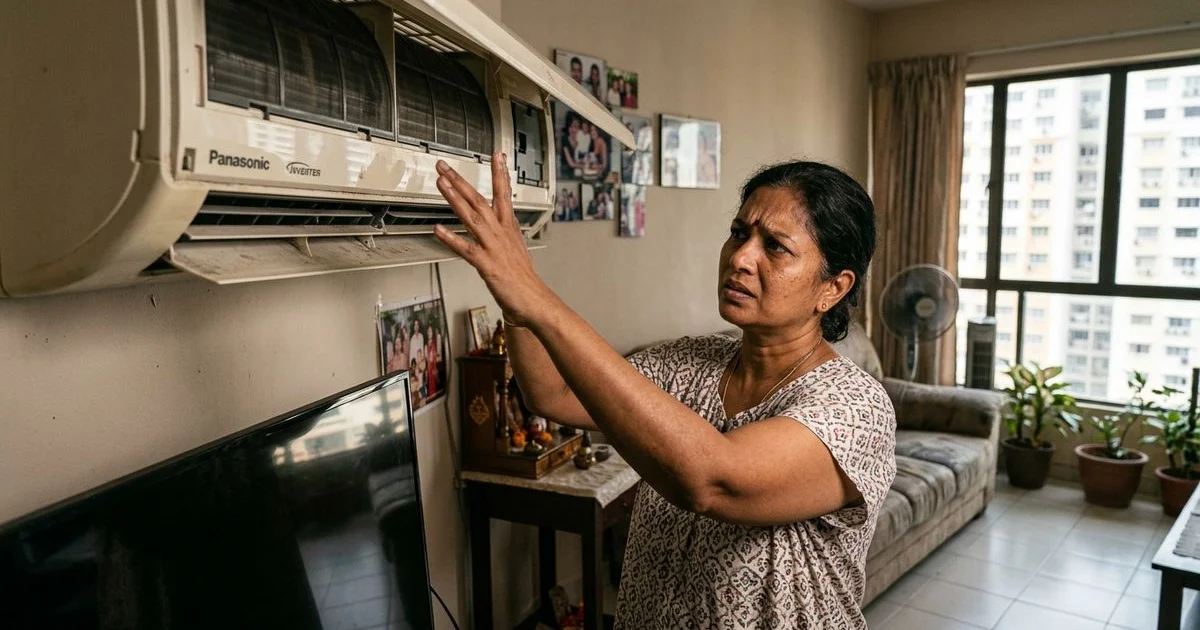
The fan sounds normal, the unit is definitely running, but the air coming out of the vent is cool rather than cold. The room eventually reaches temperature, but it takes an hour instead of fifteen minutes.
Quick test: hold a thermometer two inches from the indoor vent with the unit on Cool mode and the fan on high. A healthy aircond should deliver air between 15 and 17°C on a normal Subang Jaya afternoon. If you are measuring 22 to 25°C, gas is almost certainly low. The other tell is the way the air feels on your skin. Healthy cold air bites. Low-charge cold air is just a soft, lukewarm breeze.
Spot a Leak by What You Pay
Compare the last three months of your TNB bill against the same period a year ago. If usage is up 20 to 40 percent without any new appliances in the house, and your aircond is the main cooling source, suspect gas loss.
A low-gas inverter unit that should cycle down to 30 percent power runs flat out instead, trying to hit a setpoint it cannot reach. On a hot afternoon in March, that compounds quickly into a bill spike you will notice on the next statement.
The Rental Property Pattern
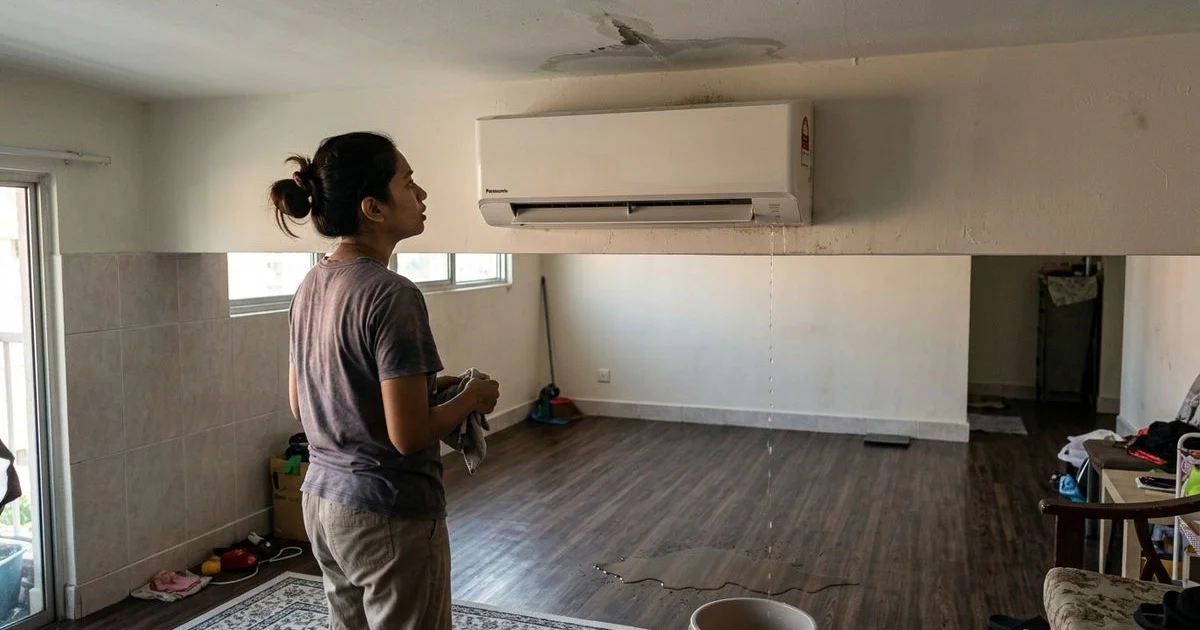
We see this every week, especially in student rental units near the universities around USJ. Landlords keep topping up tenant aircond units instead of paying for a proper repair, because each individual top-up looks cheap. The compounding compressor damage is invisible until the day it seizes, and by then the landlord has spent three times what a single repair would have cost.
If you manage rental units, factor a proper leak repair into your annual maintenance budget. The total cost is lower and the asset lifespan is longer.
What a Proper Leak Repair Looks Like
When you book a real gas service with the team at AC Service Pro Subang Jaya, the procedure is fixed:
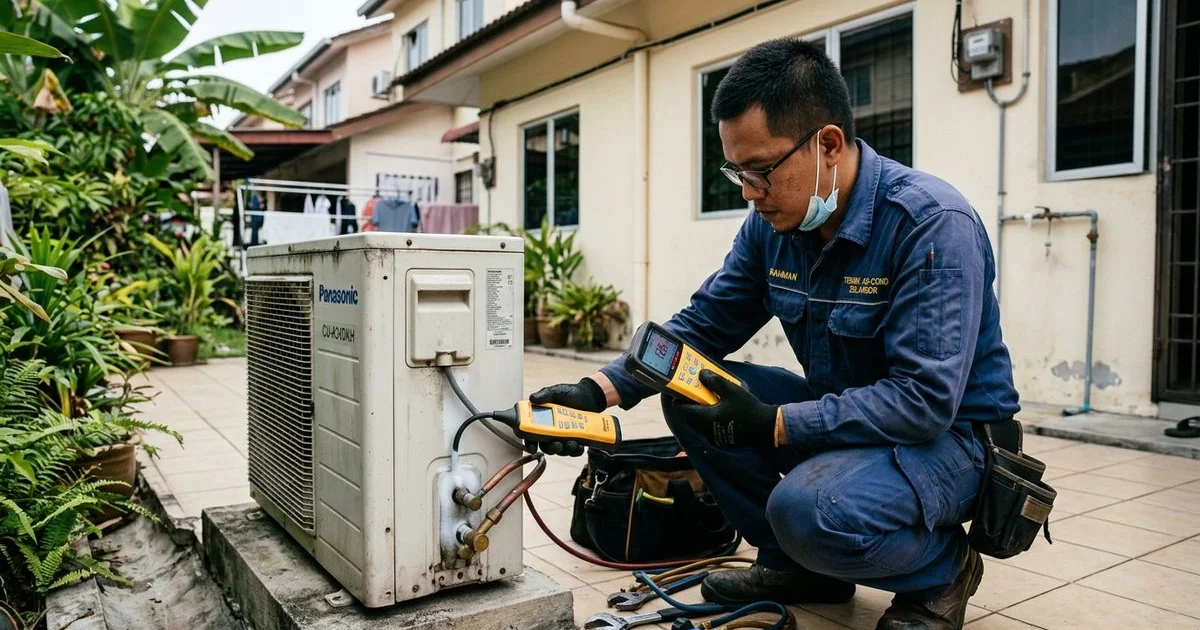
- Pressure test: Manifold gauges read current pressure against manufacturer spec
- Visual inspection: Check for oil stains, corrosion, insulation damage
- Electronic leak detection: A refrigerant sniffer pinpoints the exact location
- Repair: Solder the joint, replace the valve core, or re-crimp damaged pipe
- Vacuum: Pull a deep vacuum on the system to remove air and moisture
- Recharge: Weigh in the exact charge per manufacturer specification
- Retest: Run the unit for at least 15 minutes to verify pressures and cooling
If the leak is in an inaccessible location, like a copper line buried in concrete inside an older home, we flag it upfront and discuss the options before going further.
When a Leak Is Not Worth Repairing
There are two cases where we will tell you a repair does not make sense. First, when the leak is on a sealed compressor seam rather than an external joint. Welding inside a sealed compressor is not feasible and the only fix is replacement. Second, when an old R22 system is leaking from multiple places and the gas itself is becoming hard to source. In both cases, upgrading to a new R32 unit usually pays for itself within four years on energy savings alone.
Book a Diagnostic Visit
If you recognise any of the warning signs above, do not wait. WhatsApp us at 016-636 6769 with your unit details, brand, age, and a photo of any oil stains or frost if you can. A senior technician will reach you within 24 to 48 hours, and every repair carries a 30-day workmanship warranty.
Full service details on our gas top-up and aircond repair pages.